
Fixed Full-Arch Dental Implants
About Fixed Full-Arch Dental Implants
Fixed full-arch dental implants are a more recent innovation in restorative dentistry. The series of implants (titanium screws) and natural-looking replacement teeth restores the entirety of your teeth on either the upper or lower jaw (or both). Unlike traditional dentures, full-arch dental implants don't need to be removed or repositioned.
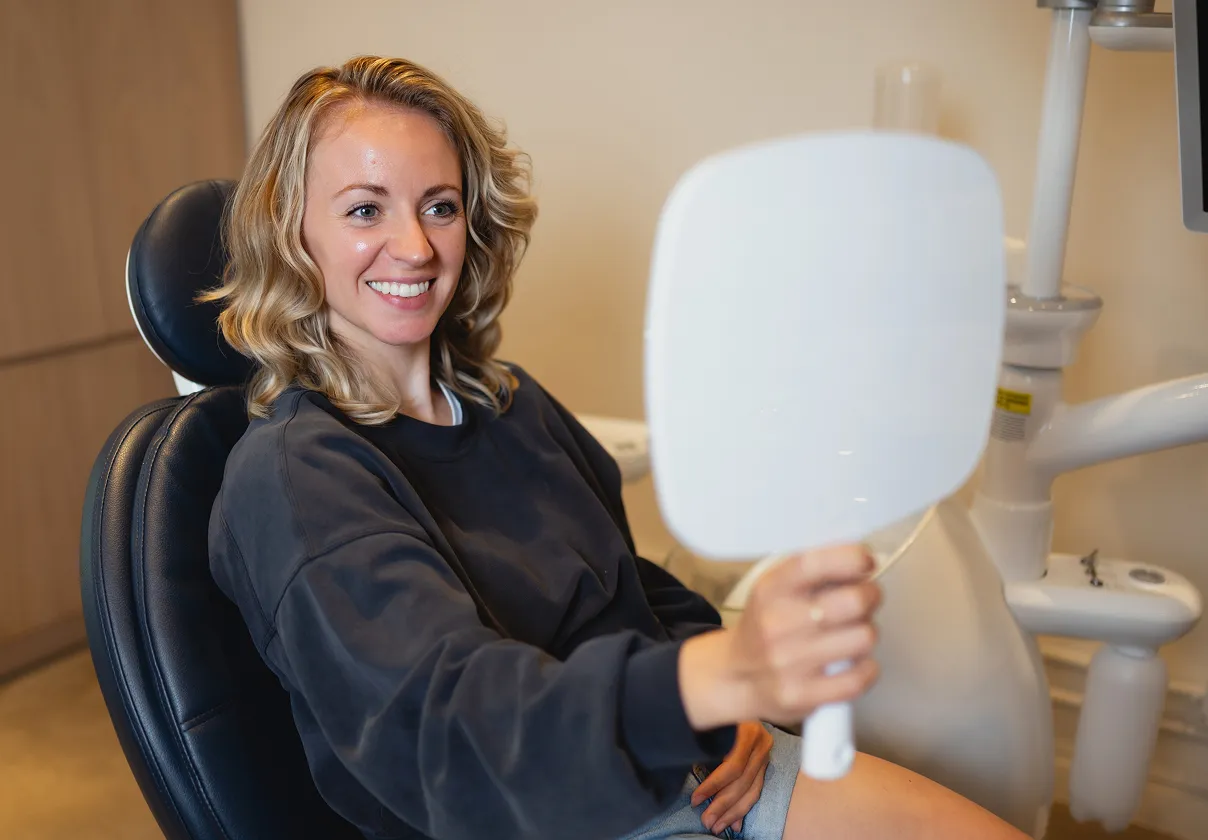

Natural-Looking Teeth
By replacing a complete set of teeth with a permanent, fixed bridge, you no longer have to worry about the aesthetics of missing teeth or the stress of dentures. Full-mouth dental implants offer the functionality and look of natural teeth, long-term stability, and durability.
Improve Your Smile
If you are considering fixed implant dentures vs. traditional dentures, talk to your dentist regarding which option is best for you. At Beam Dental, we offer comprehensive implant dentistry services from a dedicated, caring, qualified team of professionals.

Frequently Asked Questions
What are full-arch dental implants?
Full-arch dental implants replace a complete set of teeth. They're placed on the upper or lower jaw for a partial replacement or on both areas for a full replacement. Full-mouth dental implants use a system of screws secured into the jawbone and natural-looking prosthetic arches to replace the teeth. The screw serves as the tooth's "root," anchoring the arches permanently in place.
Full-arch dental implants will enhance your smile and function like natural teeth so that you can eat and talk without issue. Upkeep involves maintaining good oral hygiene, following your dentist's recommendations, and attending follow-up appointments.
What's the difference between full arch implants and All-on-4?
Full-arch implants use more implants than All-on-4 implants. All-on-4 is a set of natural-looking teeth supported by only four strategically placed implants (two at the front and two at the back). While All-on-4 implants offer stability, full arch implants provide even greater stability.
How much do full arch implants cost?
The cost for one set (either upper or lower jaw) typically starts at around $15,000 but can reach $30,000. Whether both upper and lower jaw implants are used, any additional surgical complications, and the materials used are factors that affect the price.
When considering the cost, it's important to remember that full arch implants are a lifetime investment. They can last 20 to 30 years or longer with proper care and maintenance.
How long does the procedure take?
The implant surgery can take up to eight hours. The procedure may take longer if a dentist needs to extract any remaining teeth. The post-surgery healing process usually takes three to six months. Follow your dentist's recommendations; failure to do so can delay the process.